
Scheduled Emails Tab

Access the Scheduled Meeting

On the MeetingPal Home Page, locate the left-hand menu. Select Meetings.
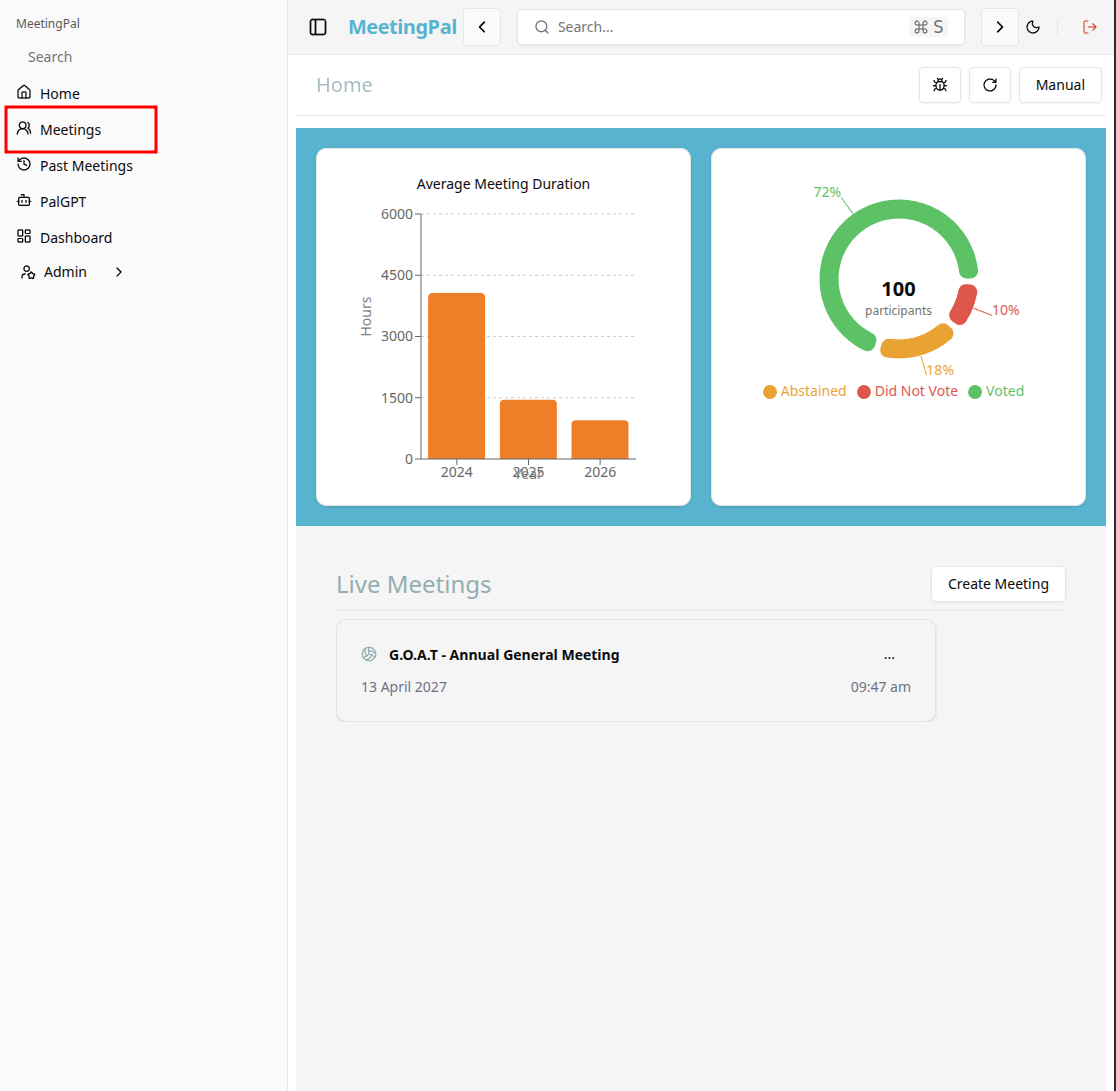
Please ensure you have a stable internet connection. If you do, consider downloading a new manual from admin.meetingpal.app

Start editing the meeting

In the meetings page ,you will see all your meetings and the meetings that you are scheduled to attend.

Click on the 'Manage Meeting' button to begin editing the selected meeting.
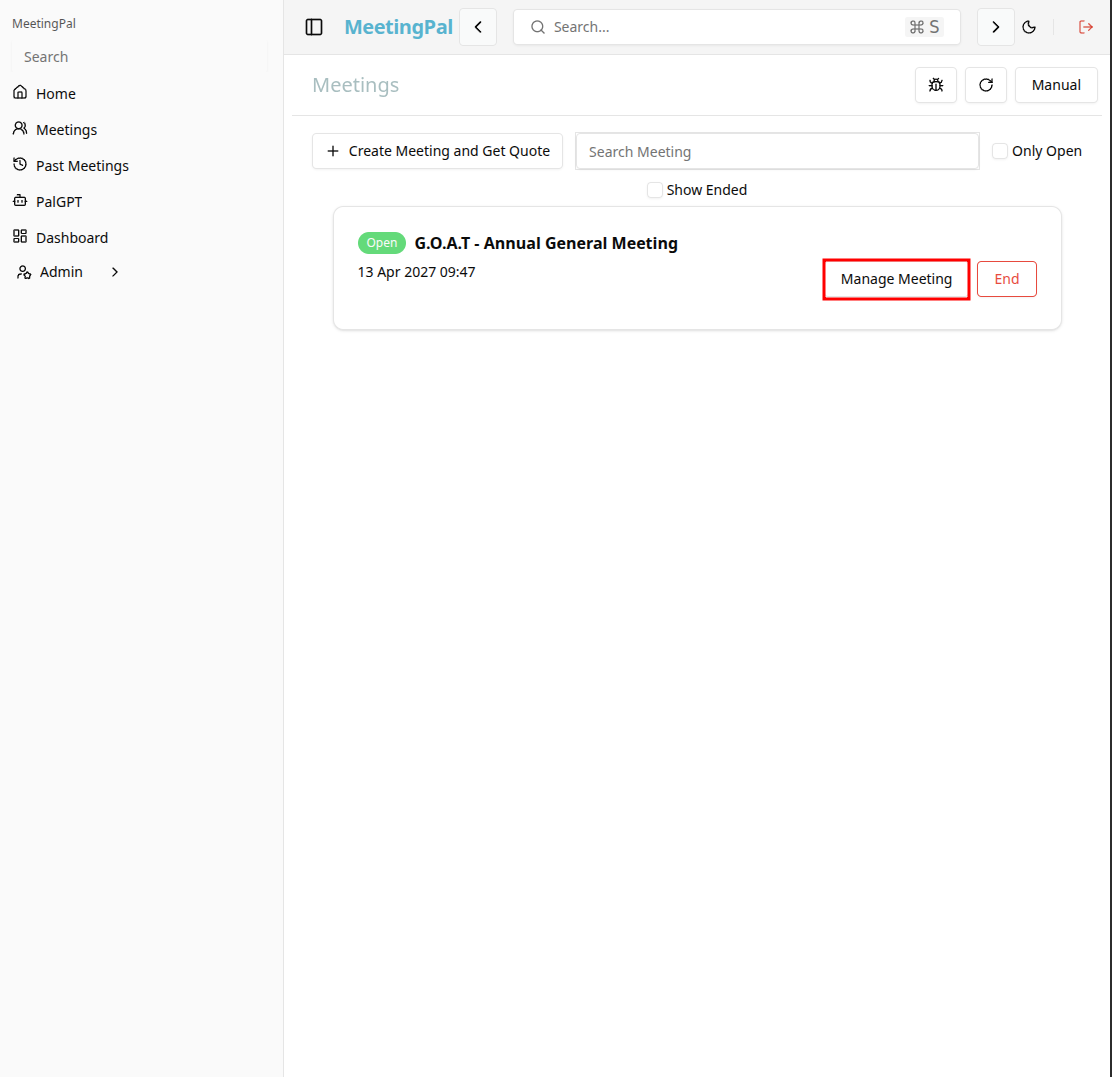
Please ensure you have a stable internet connection. If you do, consider downloading a new manual from admin.meetingpal.app

Open the Scheduled Emails Tab

In the selected meeting’s dropdown menu, click Scheduled Emails.
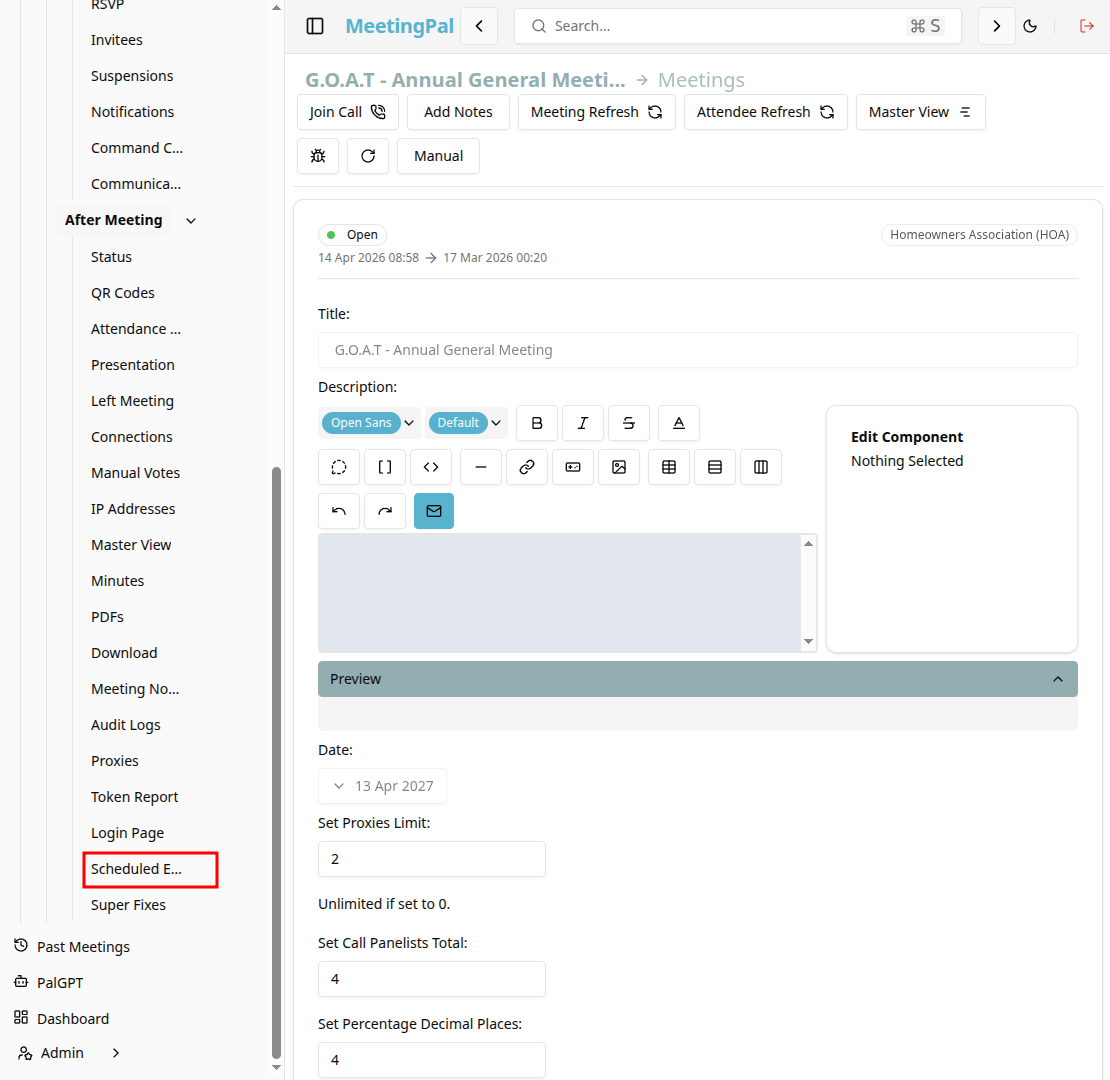
Please ensure you have a stable internet connection. If you do, consider downloading a new manual from admin.meetingpal.app

The Scheduled Emails page will open.

Understanding the Scheduled Emails Page

The Scheduled Emails page allows you to create and manage emails that will be sent automatically at a future date and time.

From this page, you can:

  • Schedule meeting invitations and reminders.
  • Configure follow-up communications.
  • Edit scheduled emails.
  • Pause or cancel pending emails.
  • Review the delivery schedule.

Configure Email Content

Use the email editor to:

  • Enter a custom subject line.
  • Write the email body.
  • Include meeting links and placeholders.
  • Add instructions and reminders.

You may also be able to insert dynamic fields such as attendee names and personalized meeting URLs.

Select Recipients

Choose who should receive the email.

Common options may include:

  • All Invitees.
  • Unsent Invitees.
  • RSVP Accepted Attendees.
  • Absent Invitees.
  • Specific Groups.

Edit or Cancel a Scheduled Email

To modify an existing schedule:

Locate the scheduled email in the list. Click Edit. Update the details and save.

To cancel a scheduled email:

Click Delete, Cancel, or Disable. Confirm the action.

Monitor Scheduled Email Status

Each scheduled email may display a status such as:

  • Scheduled.
  • Sent.
  • Paused.
  • Cancelled.
  • Failed.

Use this information to confirm that emails are queued correctly.

Common Uses for Scheduled Emails

The Scheduled Emails tab is useful for:

  • Sending invitations automatically.
  • Scheduling reminder emails.
  • Sending post-meeting follow-ups.
  • Reducing manual communication tasks.

Best Practices

Test the email content before scheduling.

Verify the correct time zone.

Review recipient groups carefully.

Monitor the status after the scheduled send time.

Important Notes

Scheduled emails are sent automatically based on the configured date and time.

Editing the Invite Email template after scheduling may not affect already scheduled messages, depending on your configuration.

Ensure recipient email addresses are accurate before scheduling.